In this article, we will simulate electron trajectory analysis inside an electron gun using PIC-PLASMA 3D (plasma analysis software) or PIC-ELECTRON 3D(electronic trajectory) analysis software.
An electron gun is a device that generates, accelerates, and narrows electrons into a beam.
It is used to create electron beams in a vacuum and is utilized in electron microscopes, CRTs, X-ray tubes, and some particle accelerators.
Electrons Inside an Electron Gun
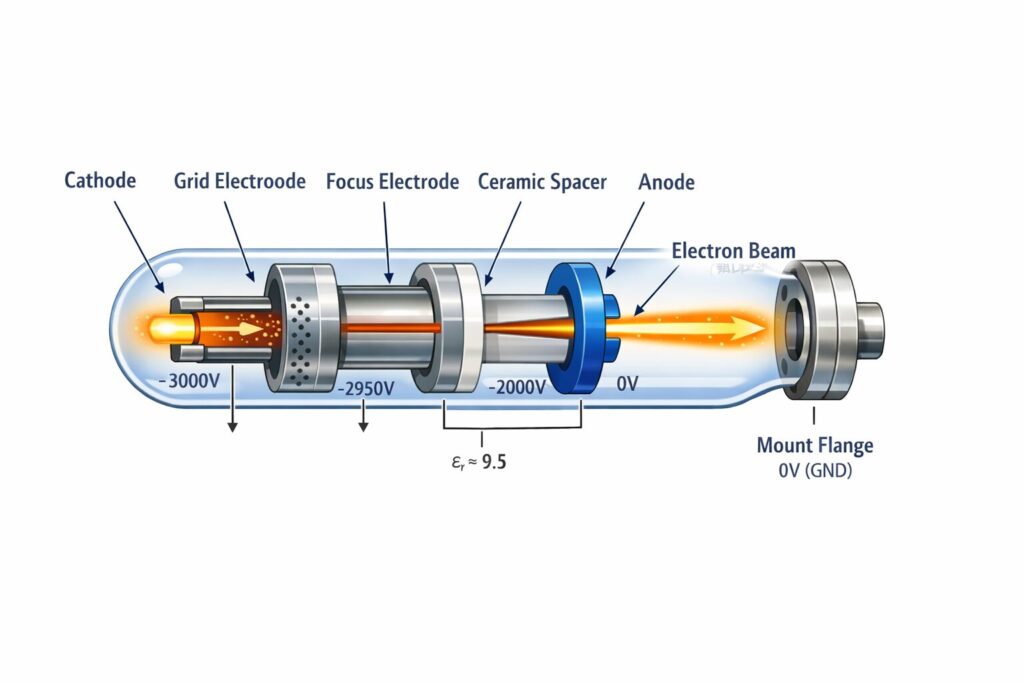
Figure 1: Conceptual diagram of electron trajectories in an electron gun
Electron Emission
In a typical electron gun, electrons are emitted from the cathode.
There are three main methods of electron emission:
-
-
-
Thermionic Emission
A method in which electrons are emitted by heating a filament or cathode -
Field Emission
A method of extracting electrons using a very strong electric field -
Photoelectric Emission
A method in which light is applied to release electrons
-
-
Among these methods, thermionic emission is commonly used in electron guns.
Electron Extraction and Acceleration
- Emit electrons from the cathode
- Pull them toward the anode
- Accelerate them
The electron beam is formed through the above process. The energy obtained by the electrons can be calculated as follows. If the potential difference is V [V], the kinetic energy gained by an electron is approximately
This can be expressed as above.
In this article, we will visualize the electron extraction process and electron beam generation in an electron gun using PIC-ELECTRON 3D.
Electron Gun Analysis
Let us analyze electrons inside an electron gun using PIC-ELECTRON 3D.
The analysis model is shown below.
Analysis Model
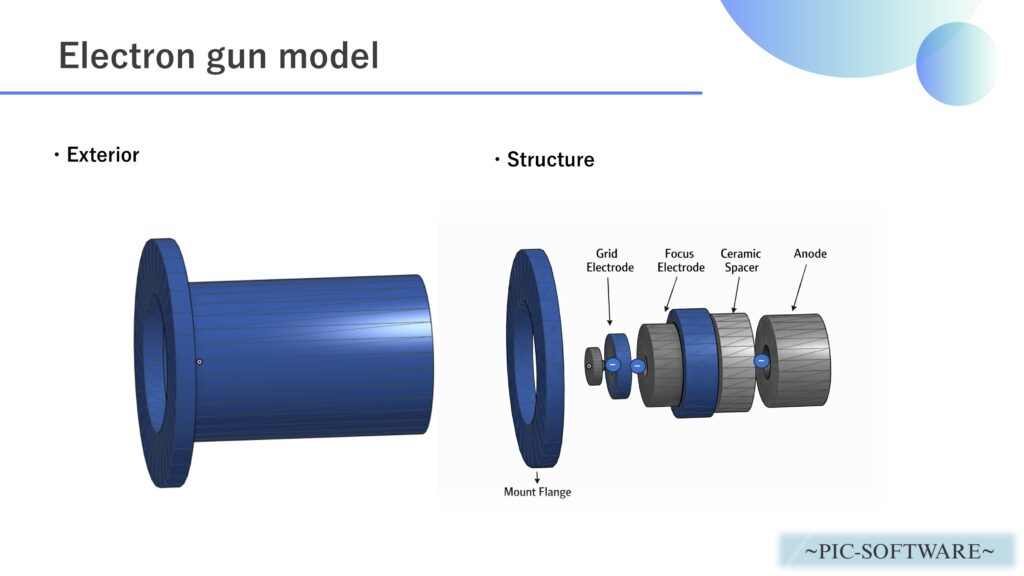
Figure 2: Analysis model of an electron gun
We create an electron gun analysis model like the one above and simulate electron extraction and electron beam formation. The roles of each component in the electron gun are as follows.
-
-
-
- Mount Flange
This part fixes the entire assembly to a vacuum chamber or external mechanism. It often serves for positioning, support, and grounding. It acts as the base for mounting the electron gun body securely. - Grid Electrode
This electrode adjusts the amount of electron extraction near the cathode. It controls whether electrons are emitted and how much current flows. In other words, it acts like a “gate” for the electron beam. - Focus Electrode
This component shapes the beam with an electric field so that emitted electrons do not spread too much. It narrows the electrons and suppresses divergence, making the beam easier to handle downstream. - Ceramic Spacer
This component electrically insulates the electrodes while maintaining their mechanical positions. It is especially important in high-voltage sections, where it prevents short circuits and ensures precise electrode alignment. - Anode
This electrode accelerates electrons and draws them forward. It gives the beam kinetic energy and sends it downstream. It plays a central role as the accelerating section of the electron gun.
- Mount Flange
-
-
Analysis Conditions
The analysis conditions are as follows.
| Simulation Software | PIC-PLASMA 3D or PIC-ELECTRON 3D |
| Analysis Type | Electron Trajectory Analysis |
| Analysis Object | electron_gun.obj |
|---|---|
| Voltage | Cathode: -3000[V] GridElectrode: 2950[V] FocusElectrode: 2000[V] Others: 0[V] |
| Relative Permittivity (Dielectric) | CeramicSpacer: 9.5 |
| Generated Electrons per 1 ns | 10,000 |
| Velocity of Generated Electrons | 1.0× 10⁴[m/s] |
| Time Step | 1.0×10⁻¹¹[s] |
| Total Simulation Time | 2.0×10⁻⁸[s] |

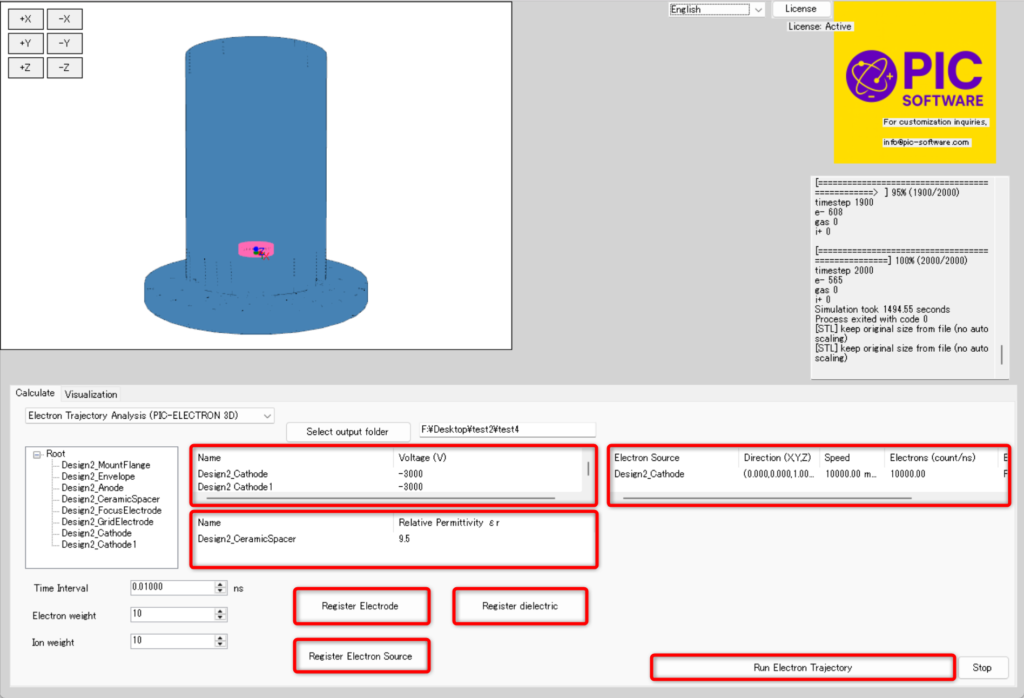
Figure 3: Setting analysis conditions in PIC-ELECTRON 3D
Analysis Results
Figure 4: Electron trajectory analysis in an electron gun
The material above shows actual analysis results calculated using PIC-ELECTRON 3D.
Figure 4 simulates the process of electron extraction and electron beam generation by acceleration voltage in an electron gun.
Please note that the CAD model used here was created in a simplified manner, so the electrode voltages and other condition settings are also simplified.
In addition to the calculation results above, PIC-ELECTRON 3D can also output various types of data.
- Electron density
- Current density vectors
- Electric field vectors
- Velocity vectors
*The above is only one example. Please make full use of PIC-ELECTRON 3D for product development involving electrons.